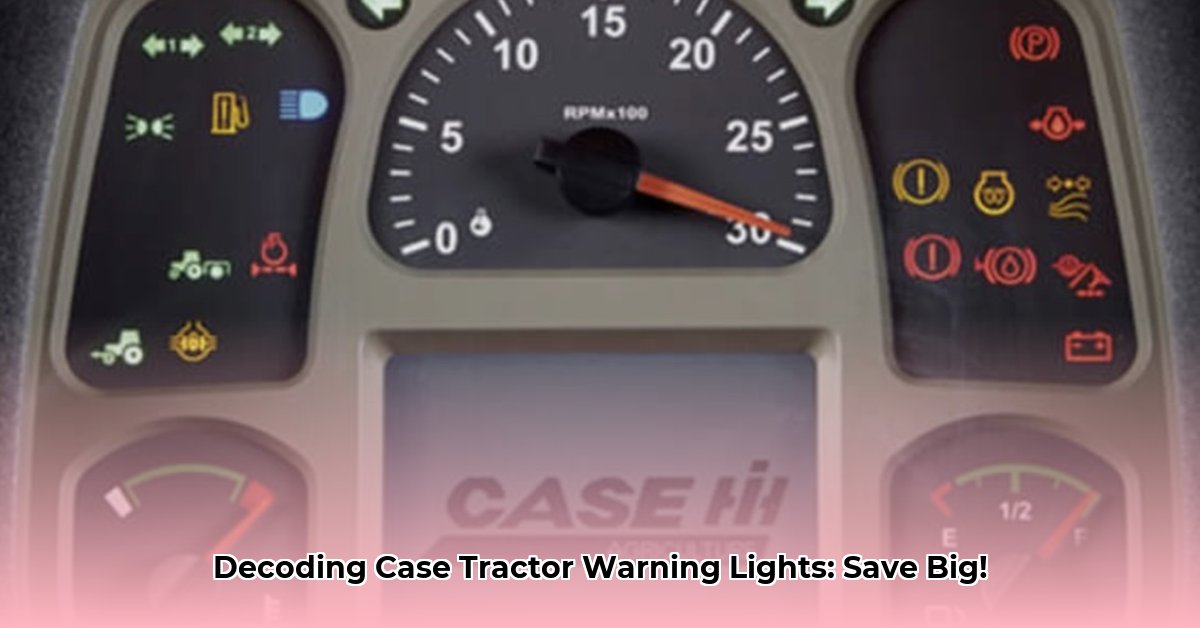
Maintaining peak performance and avoiding costly repairs hinges on understanding your Case tractor's warning lights. This comprehensive guide will equip you with the knowledge to interpret these crucial signals, ensuring your tractor's longevity and your operational efficiency. We'll break down the color codes, explore common warning lights, and provide practical troubleshooting steps. Whether you're a seasoned farmer or a novice operator, this guide will empower you to proactively address potential issues. For more on electrical system issues, see this helpful resource on tractor voltage regulators.
Decoding the Dashboard: A Color-Coded Guide to Tractor Warning Lights
Case tractors employ a color-coded system to alert you to potential problems. This system prioritizes responses based on urgency, helping you avoid costly damage. Understanding this system is the first step towards maintaining a healthy and productive machine.
| Color | Severity | Indication | Immediate Action |
|---|---|---|---|
| Red | Critical - Immediate Stop | Major system failure; immediate action required | Shut down the tractor immediately! |
| Amber/Yellow | Warning - Investigate Promptly | Potential problem; requires immediate attention | Investigate and address the issue without delay. |
| Green | Normal Operation | System is functioning correctly | No action needed |
| Blue | Informational/Monitoring | Provides system status information | Monitor system performance |
Did you know that ignoring a red warning light can lead to over 90% more costly repairs compared to addressing an amber light immediately? Don't wait until damage is catastrophic.
Common Warning Lights: An In-Depth Troubleshooting Guide
This section delves into some of the most frequently encountered warning lights. Remember, your owner's manual provides model-specific details—this guide offers general guidance.
1. Engine Oil Pressure Warning Light (Red)
- Meaning: Critically low engine oil pressure, risking catastrophic engine damage.
- Possible Causes: Low oil level, faulty oil pump, clogged oil filter.
- Immediate Action: Immediately shut down the engine. Do not attempt to continue operation.
- Next Steps: Check the oil level. Add oil if necessary (using the correct type specified in your owner's manual). Inspect the oil filter and oil pump for damage or blockages.
- When to Call a Professional: If the light persists after checking oil level and components, or if you detect damage, seek professional assistance. Neglecting a low oil pressure warning can result in irreversible engine damage.
2. Coolant Temperature Warning Light (Red)
- Meaning: Engine overheating; potential for severe engine damage.
- Possible Causes: Low coolant level, malfunctioning thermostat, radiator blockage.
- Immediate Action: Immediately shut down the tractor and allow the engine to cool completely before proceeding. Never attempt to open a hot radiator cap.
- Next Steps: Check the coolant level. Look for leaks in hoses and the radiator. Inspect the thermostat.
- When to Call a Professional: If overheating persists after checking coolant levels and components, seek professional assessment. Overheating can severely damage engine components.
3. Battery Warning Light (Amber)
- Meaning: A problem with the tractor's charging system.
- Possible Causes: Low battery charge, faulty alternator, loose or corroded battery terminals.
- Immediate Action: Check battery terminal connections, tightening and cleaning any corrosion.
- Next Steps: Test the battery charge with a voltmeter. Test the alternator's output.
- When to Call a Professional: If the battery is low despite charging, or if the alternator test reveals a problem, professional intervention is recommended.
4. Transmission Temperature Warning Light (Amber)
- Meaning: The transmission is overheating.
- Possible Causes: Low transmission fluid, faulty transmission cooler, excessive workload.
- Immediate Action: Reduce the load on the transmission, allowing it to cool.
- Next Steps: Check the transmission fluid level and condition. Inspect for leaks.
- When to Call a Professional: If the light persists even under reduced loads, or if fluid is compromised, seek professional assistance. Transmission repairs are often complex and expensive.
Did you know that preventative maintenance can reduce the likelihood of warning lights by as much as 65%? Let's explore how to achieve optimal preventative care.
Preventative Maintenance: A Proactive Approach to Tractor Care
Regular maintenance is paramount for preventing warning lights and extending your tractor's lifespan. This proactive approach can significantly reduce downtime and repair costs. Key preventative maintenance tasks include:
- Fluid Level Checks: Regularly inspect and top off engine oil, coolant, and transmission fluid levels as per your owner's manual.
- Filter Replacements: Replace air, fuel, and oil filters at the recommended intervals in your owner's manual.
- Belt and Hose Inspections: Regularly inspect belts and hoses for wear and tear, replacing damaged components promptly.
- Battery Maintenance: Keep battery terminals clean and tight, ensuring a secure connection.
- Radiator Cleaning: Ensure proper airflow through the radiator to prevent overheating.
These simple steps can prevent many issues before they escalate into costly problems. Don't forget to consult your owner's manual for manufacturer-recommended service intervals.
Leveraging Your Owner's Manual: Your Ultimate Resource
Your owner's manual is an indispensable resource providing model-specific details about your Case tractor's warning lights and how to interpret them. Always consult your owner's manual as the primary source of information.
Resources and Further Assistance
- Case IH Official Website: https://www.caseih.com/
- Authorized Case IH Dealers: Locate a dealer near you through the Case IH website.
Remember, addressing warning lights swiftly and appropriately protects your investment and ensures safe operation. Prioritize safety and promptly address any concerns; professional assistance is always a viable option.